
Protecting Marine Life in the Red Sea – Our Ocean, Our Future
The Red Sea is more than beautiful blue water.
It is more than coral reefs, diving sites, colourful fish and unforgettable holidays.
It is a living ecosystem.
Beneath the surface of the Red Sea exists a complex natural world that supports thousands of marine organisms and plays an important role in the health of coastal communities, economies and the wider environment.
For everyone who enjoys Diving in Hurghada, Hurghada Diving, or simply wants to Explore the Red Sea, protecting this marine environment is not just a responsibility.
It is an investment in the future.
At UCPA Egypt, we believe that enjoying the Red Sea and protecting the Red Sea should always go together.
Because the ocean gives us extraordinary experiences.
And the healthier the ocean remains, the more it can continue giving to future generations.
Why Is Marine Life So Important?
When people think about the ocean, they often think about what they can see.
Beautiful coral reefs.
Tropical fish.
Sea turtles.
Dolphins.
Rays.
Moray eels.
Colourful underwater landscapes.
But marine life is much more than something beautiful to observe while diving.
Marine ecosystems perform essential functions that support life on Earth.
Every coral reef, fish population, seagrass area, microorganism and marine predator forms part of a larger interconnected system.
When one part of the ecosystem changes, other parts can also be affected.
This is why protecting marine life is not only about protecting individual animals.
It is about protecting the balance of an entire ecosystem.
The Red Sea Is a Living Ecosystem
The Red Sea is one of the world’s most fascinating marine environments.
Its warm waters, coral reefs, islands, walls, lagoons and diverse habitats support an extraordinary variety of marine organisms.
For divers, this biodiversity is one of the reasons Red Sea Diving is so special.
A single dive can reveal dozens of different species.
Small reef fish move between corals.
Moray eels hide among rocks.
Turtles move across the reef.
Rays glide over sandy bottoms.
Schools of fish move together.
Predators occupy their place within the food chain.
And microscopic organisms perform functions that are invisible to most visitors.
Everything is connected.
Coral Reefs: The Foundation of the Underwater World
Coral reefs are among the most important habitats in the Red Sea.
They provide shelter, feeding areas and breeding grounds for many marine species.
A healthy coral reef can support an enormous variety of life.
For divers visiting Hurghada, coral reefs are also one of the main attractions.
The colours, shapes and diversity of a healthy reef create the unforgettable underwater landscapes that make Diving in Hurghada famous among divers.
But coral is alive.
This is an important point that every diver and snorkeller should understand.
A coral reef is not simply a collection of rocks.
Corals are living organisms that build complex structures over time.
When reefs are damaged, recovery can take a very long time.
That means our behaviour underwater matters.
Why Coral Reefs Matter to Humans
It may seem that coral reefs are far away from our daily lives.
But healthy marine ecosystems provide benefits that extend far beyond diving.
Coral reefs can provide habitat for fish.
They contribute to coastal ecosystems.
They support fishing communities.
They attract tourism.
They create employment.
They contribute to local economies.
And they help maintain biodiversity.
In a destination such as Hurghada, the connection between marine health and tourism is particularly clear.
People travel from around the world to experience the Red Sea.
They come for Hurghada Diving.
They come to learn with PADI or SSI.
They come to explore reefs.
They come to see marine animals.
They come to Explore the Red Sea.
Protecting the environment therefore also means protecting an important part of the tourism economy.
The Connection Between Marine Life and Tourism
Imagine a Red Sea without colourful coral reefs.
Imagine diving sites without schools of fish.
Imagine beaches surrounded by plastic waste.
Imagine fewer turtles, fewer rays and fewer marine animals.
Imagine underwater visibility becoming poorer.
The experience would be completely different.
The tourism industry depends on the attractiveness and health of the natural environment.
Hotels, diving centres, boat crews, instructors, guides, restaurants, transport companies and many other businesses benefit from visitors who come to experience the Red Sea.
That means marine conservation is not separate from tourism.
It is part of the foundation of sustainable tourism.
At UCPA Egypt, we believe that protecting the natural environment is essential to protecting the future of diving tourism in Hurghada.
The Ocean and Climate
Marine ecosystems are also connected to the global climate system.
The ocean absorbs and stores enormous amounts of heat and carbon and plays an important role in regulating Earth’s climate.
Healthy marine ecosystems are therefore part of a healthy planet.
This is another reason why protecting the sea should not be considered a small local issue.
The health of marine environments contributes to the health of the planet as a whole.
What Happens When Marine Ecosystems Are Damaged?
Marine ecosystems can be damaged by many different pressures.
These can include:
– Plastic pollution
– Oil and chemical pollution
– Excessive fishing
– Destruction of habitats
– Climate change
– Rising sea temperatures
– Poor waste management
– Physical damage to coral reefs
– Irresponsible tourism
– Anchoring directly on coral
– Touching or collecting marine organisms
– Feeding wildlife
– Disturbing animals
The problem is that these pressures can interact.
A reef already stressed by environmental changes may become more vulnerable to additional physical damage.
A polluted marine environment can become less suitable for marine organisms.
A damaged habitat can affect the species that depend on it.
This is why prevention is so important.
Plastic Pollution in the Sea
Plastic is one of the most visible environmental problems.
Plastic waste can enter the marine environment through rivers, beaches, boats, cities and poorly managed waste systems.
Once plastic reaches the ocean, it can remain there for a long time.
Marine animals can become entangled in larger plastic objects.
Other animals may accidentally ingest plastic.
Plastic can also break down into smaller particles that become part of the marine environment.
This is why reducing plastic use is one of the simplest ways individuals can contribute to marine conservation.
How Can Divers Reduce Plastic Pollution?
Divers can make a difference through simple daily habits.
Use a reusable water bottle.
Avoid unnecessary single-use plastics.
Do not leave plastic on boats.
Take your waste back to shore.
Use reusable bags.
Avoid throwing anything into the sea.
And if you see marine debris during a dive, only remove it when doing so is safe and appropriate.
The objective is not to turn every dive into a clean-up operation.
The objective is to make responsible behaviour part of normal diving culture.
At UCPA Egypt, we believe that every diver should leave the underwater world exactly as they would like to find it.
Never Touch Coral
One of the most important rules in Red Sea Diving is simple:
Look, but don’t touch.
It can be tempting to touch a beautiful coral formation.
But even seemingly harmless contact can damage delicate organisms.
Divers should maintain good buoyancy and avoid kicking the reef with their fins.
They should avoid holding onto coral.
They should avoid standing on the reef.
And they should maintain appropriate distance from marine life.
Good buoyancy is therefore not only a diving skill.
It is also a conservation skill.
Good Buoyancy Protects the Reef
A diver with excellent buoyancy can move through the water without touching the reef.
This reduces accidental contact with coral.
It also creates a better experience for the diver.
You can observe marine life without disturbing it.
You can take photographs without damaging the environment.
And you can move comfortably through the underwater landscape.
This is why proper training matters.
Whether you are learning through PADI, SSI, or another recognised diving education system, good diving skills contribute directly to responsible underwater behaviour.
Never Take Marine Life Home
A shell may look beautiful.
A piece of coral may seem like a perfect souvenir.
A strange-looking organism may seem interesting.
But the best souvenir from the Red Sea is a memory.
Marine organisms belong in the ecosystem.
Removing coral, shells or other marine organisms can contribute to the degradation of the environment.
Instead of taking something from the sea, take a photograph.
Leave the reef where it belongs.
Do Not Feed Wild Animals
Feeding marine animals can change their natural behaviour.
Animals may become dependent on human food.
They may begin approaching boats or divers expecting food.
This can interfere with their natural feeding patterns.
Wildlife should remain wild.
When we Explore the Red Sea, our role is to observe marine life, not to control its behaviour.
Dolphins Need Respect Too
Dolphins are among the most exciting animals people hope to encounter in the Red Sea.
But dolphins are wild animals.
A responsible encounter means allowing them to decide whether they want to approach.
Do not chase them.
Do not attempt to touch them.
Do not feed them.
Do not force them into interaction.
The same principle applies to turtles, rays, sharks and every other marine animal.
The best encounter is one in which the animal remains free.
Sea Turtles and the Red Sea
Sea turtles are another iconic part of the Red Sea ecosystem.
Seeing a turtle moving calmly over a reef can be an unforgettable experience.
But turtles need healthy habitats and clean water.
They also need to be able to feed and move without unnecessary disturbance.
Divers and snorkellers should maintain distance and allow turtles to continue their natural behaviour.
A responsible diver watches.
A responsible diver does not interfere.
Sharks Have a Role Too
Sharks are often misunderstood.
They are important predators within marine ecosystems.
Predators help maintain ecological balance by influencing populations of other animals.
For divers, seeing a shark can be one of the most exciting experiences in the Red Sea.
But sharks should also be treated with respect.
Do not chase them.
Do not attempt to touch them.
Do not provoke them.
Observe them from an appropriate distance and allow them to move naturally.
Protecting marine predators is part of protecting the entire food web.
Every Species Has a Role
Marine conservation is sometimes focused on the most attractive animals.
Dolphins.
Turtles.
Sharks.
Manta rays.
But an ecosystem cannot function based only on its most famous species.
Small fish matter.
Crabs matter.
Shrimp matter.
Moray eels matter.
Sponges matter.
Corals matter.
Plankton matter.
Even organisms that are almost invisible to us can play important ecological roles.
A healthy ecosystem depends on diversity.
The Food Chain Beneath the Surface
The Red Sea contains complex food webs.
Small organisms are eaten by larger organisms.
Herbivorous fish feed on algae.
Predators feed on other animals.
Scavengers help recycle organic material.
Different species interact in countless ways.
When populations change dramatically, these relationships can also change.
This is why protecting biodiversity is important.
A healthy ecosystem is not simply one with many animals.
It is one where ecological relationships can continue functioning.
Why Overfishing Matters
Fishing provides food and livelihoods for many communities.
The issue is not fishing itself.
The challenge is maintaining healthy fish populations and preventing unsustainable pressure on marine ecosystems.
When too many fish are removed from an ecosystem, food webs can be affected.
Removing important species can also change the structure of reef communities.
Responsible fisheries management is therefore an important part of marine conservation.
Protecting Fish Means Protecting the Reef
Fish are not simply something divers photograph.
They are part of the ecosystem.
Some fish control algae.
Some eat other organisms.
Some help move nutrients.
Others are important prey for larger predators.
When fish populations remain healthy, ecosystems can remain more balanced.
This is another reason why marine conservation must consider the entire ecosystem rather than individual species alone.
Boats and Coral Reefs
Boats are essential to Red Sea tourism.
They allow divers and snorkellers to reach reefs that would otherwise be inaccessible.
But boats must also operate responsibly.
Anchoring directly onto coral can cause serious physical damage.
Using appropriate mooring systems where available can help reduce this pressure.
Boat crews also have an important role in preventing pollution.
Waste should never be thrown into the sea.
Fuel and oil should be handled carefully.
And passengers should be encouraged to respect the marine environment.
Responsible Diving Starts Before the Dive
Marine conservation does not begin when you enter the water.
It begins before the boat leaves the marina.
Listen to the briefing.
Understand the dive plan.
Know how to control your buoyancy.
Secure your equipment.
Avoid unnecessary contact with the reef.
Understand local rules.
Ask questions when you are unsure.
Small actions create responsible divers.
Dive Guides Have an Important Role
Dive guides and instructors are not only responsible for showing divers where to find marine life.
They also have an educational role.
A good guide can explain:
– Why coral should not be touched
– How to maintain good buoyancy
– How to approach marine animals responsibly
– Why feeding wildlife is inappropriate
– How to reduce plastic waste
– Why marine ecosystems matter
Education is one of the strongest tools available for conservation.
When people understand why something matters, they are more likely to protect it.
Teaching the Next Generation
Marine conservation is also about education.
Children who grow up understanding the importance of the sea can become adults who respect it.
Families visiting Hurghada can turn a holiday into an educational experience.
Instead of simply saying, “Look at the fish,” we can teach children:
Why are coral reefs important?
Why should we not touch animals?
Where does plastic waste go?
Why should we keep beaches clean?
Why are turtles important?
Why should we protect dolphins?
These questions create environmental awareness that can last a lifetime.
The Role of Diving Centres
Diving centres have a special relationship with the marine environment.
They depend on healthy reefs.
Their instructors spend time in the water.
Their boats visit marine habitats regularly.
Their clients come specifically to experience underwater life.
This creates a responsibility.
At UCPA Egypt, diving is not only about completing a dive.
It is about learning how to interact with the underwater environment responsibly.
Whether someone is taking their first experience or progressing through PADI or SSI training, environmental awareness should be part of the diving culture.
Sustainable Diving in Hurghada
Sustainable diving means enjoying the Red Sea without unnecessarily damaging it.
It means:
Dive without touching.
Observe without chasing.
Photograph without disturbing.
Travel without leaving waste.
Learn without exploiting wildlife.
Enjoy without destroying.
These principles are simple.
But when thousands of divers follow them, their collective impact can be significant.
How Tourists Can Protect the Red Sea
You do not have to be a marine biologist to help protect the sea.
You do not have to be an experienced diver.
You do not need expensive equipment.
You can start with simple actions.
Use less plastic.
Carry reusable bottles.
Keep beaches clean.
Never throw waste into the sea.
Do not touch coral.
Do not collect marine life.
Do not feed animals.
Respect wildlife.
Choose responsible tourism operators.
Follow local environmental regulations.
And encourage other people to do the same.
How Divers Can Become Ocean Ambassadors
Every diver can become an ambassador for the marine environment.
When you learn something about coral, tell another diver.
When you see someone touching coral, politely explain why it is harmful.
When you see plastic on a beach, dispose of it properly.
When you take photographs, show people the beauty of the Red Sea without damaging it.
When you return home, share the message.
The influence of one responsible diver can extend far beyond one dive.
Photography and Marine Conservation
Underwater photography is a wonderful way to connect people with the marine environment.
A photograph of a turtle can inspire someone to care about turtles.
A photograph of a healthy coral reef can demonstrate what a thriving ecosystem looks like.
A photograph of a dolphin in the wild can create an emotional connection with marine conservation.
But photographers must remember one rule:
The photograph is never more important than the animal.
Never chase an animal simply to get a closer picture.
Never touch coral to create a better composition.
Never block an animal’s path.
The best photograph is one captured without changing the animal’s behaviour.
The Economic Value of a Healthy Red Sea
A healthy marine environment creates economic opportunities.
Tourism depends on attractive natural environments.
Diving centres depend on healthy reefs.
Boat operators depend on marine tourism.
Hotels benefit from visitors attracted to the Red Sea.
Restaurants, transport companies, guides and many other businesses benefit from tourism.
This means marine conservation is not simply an environmental issue.
It is also an economic issue.
Protecting the Red Sea means protecting opportunities for people who depend on it.
The Future of Hurghada Diving
The future of Hurghada Diving depends on the future of the Red Sea.
If marine ecosystems remain healthy, future divers can continue discovering colourful reefs, marine animals and spectacular underwater landscapes.
If ecosystems are damaged, the experience changes.
This is why today’s decisions matter.
The diver visiting Hurghada today has a responsibility to the diver who will arrive twenty years from now.
We should leave the Red Sea in a condition that allows future generations to experience it.
The Red Sea Belongs to Future Generations Too
The sea does not belong only to us.
We are temporary visitors.
The reefs existed before us.
Marine animals lived there before we arrived.
And future generations deserve the opportunity to experience the same natural world.
When we protect a coral reef today, we are not only protecting today’s dive.
We are protecting tomorrow’s dive.
When we refuse to throw plastic into the sea, we are protecting an ecosystem that will continue long after our holiday ends.
When we teach children to respect marine life, we are investing in the future.
Our Responsibility at UCPA Egypt
At UCPA Egypt, we believe that diving should create a connection between people and the ocean.
The more people experience the beauty of the Red Sea, the more opportunities there are to create awareness about its importance.
Our goal is not simply to show people the underwater world.
It is to help them understand it.
A diver who understands the reef behaves differently.
A snorkeller who understands marine life behaves differently.
A traveller who understands the impact of plastic behaves differently.
Education creates responsibility.
And responsibility creates protection.
Explore the Red Sea – Protect What You Love
There is a simple idea behind marine conservation:
It is easier to protect something when you understand its value.
When you see a healthy coral reef, you understand what is worth protecting.
When you swim beside a sea turtle, you understand why its habitat matters.
When dolphins pass through the blue water, you understand that the sea is alive.
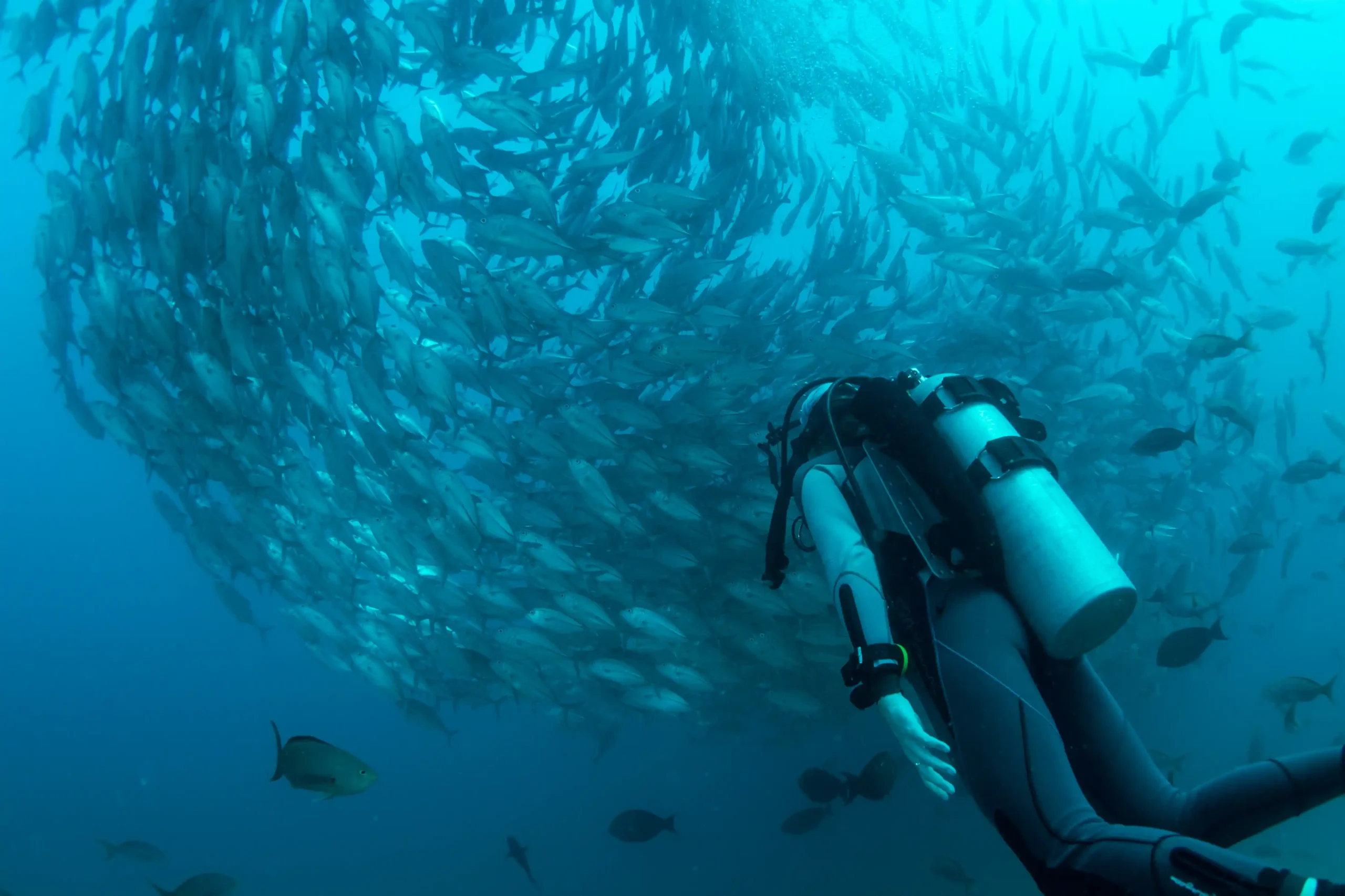
When you see thousands of fish moving together above a reef, you understand that the ocean is not empty.
It is a living world.
And that world needs our respect.
The Future Starts With Our Daily Choices
Marine conservation does not depend only on governments, scientists or environmental organisations.
It also depends on ordinary people.
Divers.
Snorkellers.
Tourists.
Boat crews.
Instructors.
Hotel guests.
Families.
Local communities.
Businesses.
Every decision matters.
Every piece of plastic we refuse matters.
Every coral reef we avoid touching matters.
Every animal we allow to remain undisturbed matters.
Every person we educate matters.
The future of the Red Sea is created by millions of these small decisions.
Protect the Red Sea. Protect Our Future.
The Red Sea gives us beauty.
It gives us biodiversity.
It gives us tourism.
It gives us jobs.
It gives us food.
It supports coastal communities.
It provides a place for education, exploration and unforgettable experiences.
But the relationship must work both ways.
If we want the Red Sea to continue giving to us, we must give something back:
Respect.
Protection.
Responsibility.
Education.
Care.
At UCPA Egypt, we believe that the future of Diving in Hurghada depends on protecting the environment that makes diving in Hurghada special.
Whether you are discovering scuba diving for the first time, completing a PADI or SSI course, joining an experienced Red Sea Diving trip, or simply travelling to Explore the Red Sea, you are part of this ecosystem for a short time.
Leave it better understood.
Leave it respected.
Leave it protected.
Because the goal is not simply to enjoy the Red Sea today.
The goal is to make sure that tomorrow’s divers can still discover the same extraordinary underwater world.
UCPA Egypt – Explore. Dive. Respect. Protect.
The Red Sea is one of the world’s great natural treasures.
Let’s enjoy it.
Let’s learn from it.
Let’s protect it.
And let’s make sure that its coral reefs, fish, turtles, dolphins, rays and countless other forms of marine life continue to thrive for generations to come.
UCPA Egypt – Discover the Red Sea, experience its beauty, and help protect its future.

Recent Posts