
The History of Diving – From Ancient Divers to Modern Scuba Diving
Long before modern scuba equipment existed, humans were fascinated by what was beneath the surface of the water.
The ocean has always represented both mystery and opportunity.
People entered the water to search for food, collect valuable materials, explore coastlines, recover objects and eventually discover an entirely new underwater world.
Today, millions of people around the world enjoy recreational diving.
They travel to destinations such as Egypt, learn through organisations such as PADI and SSI, put on a mask, regulator, BCD and fins, and descend beneath the surface to Explore the Red Sea.
But modern scuba diving is the result of thousands of years of experimentation, invention and human curiosity.
The history of diving is therefore much more than the history of a piece of equipment.
It is the history of humanity’s attempt to enter an environment where humans cannot naturally breathe.
And that journey eventually transformed the way we explore the underwater world.
What Is Diving?
Before looking at the history of diving, it is important to understand what diving actually means.
Diving is the act of entering and moving beneath the surface of water.
There are many different forms of diving.
Freediving involves holding your breath while descending underwater.
Surface-supplied diving provides breathing gas from the surface through a hose.
Scuba diving allows a diver to carry their breathing gas underwater.
Commercial diving, military diving, scientific diving and technical diving all developed from different needs and technological advances.
Recreational scuba diving is the form most people encounter today.
It allows people to explore reefs, wrecks, caves and marine ecosystems without having to return to the surface after every breath.
This ability completely transformed underwater exploration.
The Earliest Human Divers
Humans have been diving for thousands of years.
Long before regulators and compressed-air cylinders, people discovered that they could hold their breath and temporarily enter the underwater world.
Ancient communities used breath-hold diving to collect food and valuable materials.
UCPA Egypt
Divers searched for:
– Fish
– Shellfish
– Pearls
– Sponges
– Coral
– Seaweed
– Other marine resources
In many coastal cultures, diving became an important part of daily life and local economies.
These early divers did not have modern masks, fins or wetsuits.
Their equipment was extremely limited.
Their greatest tools were experience, breath control and knowledge of the sea.
Freediving: The Original Form of Diving
In many ways, freediving is the oldest form of diving.
A person takes a breath, enters the water and descends while holding that breath.
The concept is incredibly simple.
But reaching significant depths requires skill, training and an understanding of the human body.
Ancient breath-hold divers developed techniques that allowed them to stay underwater long enough to collect resources.
Modern freedivers continue to explore the limits of human performance underwater.
Although modern freediving equipment is much more advanced, the basic principle remains the same.
One breath.
One descent.
One return to the surface.
Ancient Pearl Divers
Pearls were among the most valuable materials collected by ancient divers.
Pearl diving existed in several parts of the world, particularly in regions where pearl oysters were abundant.
Divers descended without modern breathing equipment and searched the seabed for oysters.
The work could be physically demanding and dangerous.
Divers had to manage breath-hold time, depth, currents and marine conditions.
UCPA Egypt
Pearl diving demonstrates an important fact about the history of diving:
Humans did not initially enter the underwater world simply for recreation.
They entered because the ocean provided resources that were valuable to their communities.
Ancient Sponge Diving
Sponge diving also played an important role in Mediterranean history.
Natural sponges were collected by divers who descended to the seabed and removed them manually.
This required knowledge of local waters, physical endurance and considerable breath-hold ability.
The Mediterranean and surrounding regions therefore became important parts of the long history of human underwater activity.
These traditional diving cultures contributed knowledge that would eventually become part of the broader development of diving.
The Problem Humans Had to Solve
There was one fundamental problem.
Humans cannot breathe underwater.
This simple biological limitation shaped the entire history of diving.
Every major development in diving technology attempted to solve the same basic challenge:
How can a human remain underwater while continuing to breathe?
At first, people experimented with simple methods.
Eventually, inventors began developing systems that could supply air underwater.
This marked the beginning of a completely new era.
Early Attempts at Underwater Breathing
One of the earliest ideas was surprisingly simple:
Take air from the surface through a tube.
The concept seems obvious, but it has a major limitation.
As a person descends, water pressure increases.
UCPA Egypt
A simple breathing tube cannot allow a diver to breathe comfortably at significant depth because the surrounding water pressure makes it increasingly difficult to draw air through the tube.
Nevertheless, the concept demonstrated the basic principle of supplying air from the surface.
Diving Bells
One of the most important early developments in underwater exploration was the diving bell.
A diving bell is an enclosed space that traps air underwater.
A person can descend inside the bell and breathe the trapped air for a limited period.
Ancient and later inventors experimented with versions of this concept.
The diving bell did not allow complete freedom of movement, but it demonstrated that humans could take an air-filled environment underwater.
This was a major conceptual step in the history of diving.
Diving Bells and Underwater Work
Over time, diving bells became increasingly sophisticated.
They were used for underwater work, exploration and salvage.
A diving bell could allow workers to remain underwater longer than a simple breath-hold dive.
However, the diver was still limited by the size of the bell and the available air.
The next major breakthrough would involve supplying air continuously from the surface.
UCPA Egypt
Surface-Supplied Diving
As technology developed, systems were created that allowed divers to receive air from the surface.
A pump could deliver air through a hose to a diver underwater.
This dramatically increased the amount of time a person could remain submerged.
Instead of carrying all of their breathing gas, the diver could receive air continuously from the surface.
This principle remains important today in commercial diving.
The Diving Helmet
The development of the diving helmet was another major step.
A helmet could cover the diver’s head and provide a controlled breathing environment.
Air could be pumped from the surface into the helmet.
The diver could then remain underwater for extended periods while performing work.
This technology became especially important for construction, salvage and other underwater operations.
The Birth of Professional Diving
As diving equipment improved, underwater work became increasingly practical.
UCPA Egypt
Divers could work on:
– Ships
– Ports
– Bridges
– Pipelines
– Harbours
– Underwater construction projects
– Salvage operations
This created the foundations of modern commercial diving.
The underwater environment was no longer completely inaccessible.
It became a workplace.
The Importance of Diving in Warfare
Military organisations also became interested in underwater technology.
Divers could perform tasks that were impossible for people on the surface.
They could inspect ships, perform underwater operations, work with mines and conduct specialised missions.
This contributed to further development of underwater equipment.
Military requirements often accelerated technological innovation.
Some technologies developed for professional or military purposes later influenced recreational diving.
The Development of the Diving Suit
Cold water was another major problem.
Even when divers could breathe underwater, they could not remain comfortable indefinitely.
Water removes body heat much faster than air.
This created the need for protective diving clothing.
Early diving suits were designed to keep divers relatively dry and protected from cold water.
Later, wetsuits transformed recreational diving by allowing divers to remain warm while moving freely underwater.
Jacques Cousteau and the Modern Scuba Revolution
One of the most important names in modern recreational diving is Jacques-Yves Cousteau.
UCPA Egypt
Cousteau was a French naval officer, explorer, filmmaker and diver.
His work helped transform scuba diving from a specialised activity into something that could be explored by a much wider audience.
Together with engineer Émile Gagnan, Cousteau helped develop the Aqua-Lung, an early successful demand regulator system.
The regulator delivered breathing gas to the diver when needed.
This was a revolutionary development.
For the first time, divers could carry their own breathing gas and move relatively freely underwater.
What Made SCUBA Different?
SCUBA stands for:
Self-Contained Underwater Breathing Apparatus.
The concept is fundamental.
Instead of receiving air through a hose from the surface, the diver carries their breathing gas with them.
A cylinder stores compressed breathing gas.
A regulator reduces the pressure and delivers gas to the diver.
This gives the diver much greater freedom of movement.
SCUBA changed everything.
The Rise of Recreational Diving
Once reliable scuba equipment became available, diving began to move beyond professional and military applications.
People started diving because they wanted to explore.
They wanted to see coral reefs.
They wanted to photograph marine life.
They wanted to discover shipwrecks.
They wanted to experience a world that humans had never evolved to inhabit naturally.
Recreational diving was born.
Underwater Exploration Becomes Accessible
The development of reliable masks, fins, regulators, buoyancy systems and wetsuits made diving progressively more accessible.
Divers could descend, explore a reef and return to the surface.
They no longer needed a large diving bell.
They no longer needed to remain connected to the surface by an air hose.
They could travel underwater.
UCPA Egypt
This freedom is one of the defining characteristics of modern scuba diving.
The Importance of the Diving Mask
The human eye is not naturally adapted to seeing clearly underwater.
A diving mask creates an air space in front of the eyes.
This allows divers to see underwater much more clearly.
The mask may appear simple, but it is an essential piece of diving equipment.
Without it, underwater exploration would be dramatically more difficult.
The Development of Fins
Humans are not naturally efficient swimmers.
Fins changed that.
By increasing the surface area of the diver’s feet, fins allow divers to move through the water more efficiently.
This reduces unnecessary effort and helps divers conserve energy and breathing gas.
Modern fins come in many designs, but their fundamental purpose remains the same:
To help humans move more efficiently through water.
The Development of the Regulator
The regulator is one of the most important pieces of scuba equipment.
A scuba cylinder contains gas at very high pressure.
A diver cannot simply breathe directly from that cylinder.
The regulator reduces the gas pressure and delivers it at a pressure suitable for breathing.
Modern regulators have become extremely reliable.
They allow divers to breathe comfortably underwater while maintaining control over their breathing gas.
The Development of the BCD
Another important development was the buoyancy compensator device, commonly called a BCD.
A BCD allows divers to adjust their buoyancy by adding or releasing gas.
This makes it easier to maintain a desired position in the water.
Good buoyancy is essential for modern recreational diving.
It also has an environmental benefit.
A diver with good buoyancy is less likely to accidentally touch coral or disturb the seabed.
Diving Computers
Early divers had to rely heavily on tables and calculations to manage their dives.
Modern diving computers have transformed this process.
A dive computer can track depth and time and calculate information relevant to the diver’s decompression management.
UCPA Egypt
Modern computers may also provide additional information such as ascent rate, no-decompression information and gas-related data depending on the model.
Technology has therefore made diving more manageable and has changed how divers plan and monitor their dives.
Underwater Photography
As diving became easier, people wanted to record what they saw.
Underwater photography developed alongside diving technology.
Photographers faced difficult conditions:
– Low light
– Water movement
– Pressure
– Limited visibility
– Colour loss with depth
– Limited breathing gas
Yet underwater photography became increasingly sophisticated.
Today, even recreational divers can capture spectacular images of the underwater world.
These images have also become powerful tools for marine conservation.
A photograph of a coral reef can show people what exists beneath the surface.
The Development of Diving Training
As more people began diving, the need for structured training became increasingly important.
Diving is not simply swimming underwater.
Divers need to understand:
– Equipment
– Buoyancy
– Breathing gas
– Pressure
– Equalisation
– Communication
– Emergency procedures
– Dive planning
– Environmental awareness
Training organisations developed structured educational systems to teach these skills.
PADI and the Development of Recreational Diving Education
PADI, the Professional Association of Diving Instructors, became one of the world’s largest recreational diving training organisations.
Its growth contributed significantly to the global expansion of recreational scuba diving.
Today, millions of divers learn through structured training programs and continue progressing through different levels of diving education.
UCPA Egypt
From beginner programs to advanced and specialised courses, formal education has helped make recreational diving more accessible.
SSI and Diving Education
SSI, Scuba Schools International, is another major international diving training organisation.
Like PADI, SSI provides structured education for recreational divers at different experience levels.
The development of organisations such as PADI and SSI helped create a common language of diving education around the world.
A diver can train, gain experience and continue developing skills as they travel to different destinations.
From Open Water to Advanced Diving
Modern recreational diving often begins with an introductory experience or an Open Water certification.
As divers gain experience, they can continue their education through advanced programs.
Divers may develop skills in areas such as:
– Deep diving
– Navigation
– Night diving
– Wreck diving
– Photography
– Buoyancy
– Rescue
– Other specialised areas
The objective is not simply to collect certifications.
The objective is to become a more knowledgeable, capable and responsible diver.
Rescue Diving
One of the important developments in modern diving education is the emphasis on diver safety and rescue skills.
Rescue training teaches divers how to recognise problems and respond appropriately.
It represents a significant step beyond basic diving skills.
A responsible diving culture is not only about exploring the underwater world.
It is also about understanding how to manage risk and support other divers.
The History of Diving in Egypt
Egypt has a particularly important place in the modern history of recreational diving.
The Red Sea became one of the world’s major diving destinations because of its extraordinary marine biodiversity, warm waters and extensive coral reefs.
Destinations such as Hurghada, Sharm El Sheikh, Dahab and Marsa Alam attracted divers from around the world.
Today, Egypt remains one of the most recognised destinations for Red Sea Diving.
The Rise of Diving in Hurghada
Hurghada developed from a small Red Sea coastal settlement into an international tourism destination.
Its access to reefs, islands and offshore dive sites helped establish it as an important centre for diving.
UCPA Egypt
Today, people travel to Hurghada specifically to experience Diving in Hurghada.
The city provides access to a wide variety of diving experiences, from beginner dives to advanced exploration.
Why the Red Sea Became So Important to Diving
The Red Sea offers a combination of characteristics that are highly attractive to divers.
Warm water.
Coral reefs.
Marine biodiversity.
Interesting underwater landscapes.
Wrecks.
Offshore reefs.
Clear water.
A long diving season.
These characteristics helped establish Egypt as one of the world’s major diving destinations.
For divers, Explore the Red Sea is not simply a slogan.
It represents access to a huge underwater environment filled with different ecosystems and marine species.
Hurghada Diving Today
Modern Hurghada Diving is very different from the diving practiced by the earliest humans.
Today’s diver can wake up in a hotel, board a modern dive boat, travel to a reef, complete a carefully planned dive and return to the surface with a computer providing detailed information about the dive.
UCPA Egypt
They can communicate underwater using hand signals.
They can photograph marine life.
They can navigate using modern equipment.
And they can learn through internationally recognised systems such as PADI and SSI.
This entire experience is the result of centuries of development.
From Ancient Divers to UCPA Egypt
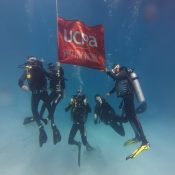
When a diver enters the Red Sea today with UCPA Egypt, they are participating in a tradition that is thousands of years old.
The equipment may be modern.
The boat may be modern.
The regulator may be highly engineered.
The dive computer may be digital.
But the fundamental human motivation remains remarkably similar.
Curiosity.
The desire to explore.
The desire to discover what exists beneath the surface.
Thousands of years ago, humans entered the sea to discover what was there.
Today, we continue doing exactly that.
The Future of Diving
UCPA Egypt
The history of diving is not finished.
Technology continues to evolve.
Modern regulators are becoming more advanced.
Dive computers are becoming increasingly sophisticated.
Underwater communication technology continues to develop.
Rebreathers are allowing some divers to remain underwater for longer periods while reducing bubbles.
Underwater cameras are becoming more powerful.
Scientific diving is revealing more about the ocean.
And marine conservation is becoming an increasingly important part of the diving community.
The next chapter of diving will be shaped not only by technology, but also by our relationship with the marine environment.
Diving Has Changed – But the Ocean Remains
Equipment changes.
Training systems evolve.
Technology improves.
Boats become more comfortable.
Cameras become more powerful.
But the ocean itself remains the reason we dive.
The sound of your breathing underwater.
The feeling of weightlessness.
UCPA Egypt
The movement of fish around you.
The colours of the reef.
The feeling of looking into blue water and knowing that an entire world exists beneath you.
These experiences connect modern divers with the same sense of curiosity that brought humans into the water thousands of years ago.
The History of Diving Is a History of Exploration
From breath-hold pearl divers to modern scuba instructors, the history of diving has always been about exploration.
Every major technological development opened another door.
Diving bells allowed people to remain underwater.
Surface-supplied systems allowed longer underwater work.
Helmets protected divers.
The Aqua-Lung gave divers freedom.
Modern regulators made breathing underwater practical.
BCDs improved buoyancy.
Computers transformed dive management.
PADI and SSI helped organise diving education.
And modern diving centres make the underwater world accessible to millions of people.
Discover the Next Chapter with UCPA Egypt
Today, you do not need to be an inventor, explorer or professional diver to discover the underwater world.
You can start with an introductory experience.
You can learn through a recognised PADI or SSI program.
You can progress through Open Water and Advanced diving.
You can develop your rescue skills.
UCPA Egypt
You can join diving trips.
And you can experience the incredible marine environment of the Red Sea.
At UCPA Egypt, we are part of this modern diving story.
Our goal is to connect people with the underwater world of Egypt and help them discover the incredible environment beneath the surface.
From the First Breath-Hold to Modern Scuba
Thousands of years ago, a human took a breath and disappeared beneath the surface.
That simple act represented one of humanity’s earliest attempts to enter an environment that was not naturally ours.
Today, a diver can descend with a cylinder on their back and breathe comfortably at depth.
Between those two moments lies an extraordinary history of invention, courage, curiosity and exploration.
The story of diving is ultimately the story of humans refusing to accept that the underwater world was inaccessible.
And the story continues every time a new diver enters the water for the first time.
UCPA Egypt – Explore the History, Discover the Red Sea
From ancient freedivers to modern scuba divers, the journey has always been about discovering what lies beneath the surface.
Today, the Red Sea offers one of the world’s most spectacular environments in which to continue that journey.
Whether you are interested in Diving in Hurghada, Hurghada Diving, Red Sea Diving, PADI, SSI, beginner diving, advanced diving or simply want to Explore the Red Sea, the underwater world is waiting.
The technology may have changed.
The equipment may have changed.
But one thing has never changed:
The desire to explore what lies beneath the surface.
UCPA Egypt – Dive into the history. Explore the Red Sea. Discover the underwater world.

Recent Posts